
Bokpin Calls for Humility in Economic Management Amid Goldbod Program Loss Debate
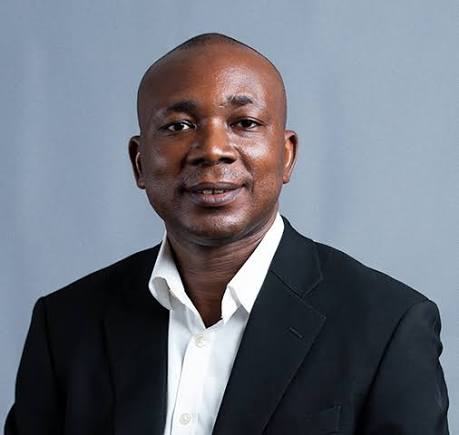
University of Ghana economist Professor Godfred Bokpin has called for a fundamental change in the attitude of Ghanaian political leaders, arguing that pride, arrogance and a lack of humility often prevent governments from acknowledging mistakes and making timely corrections.
His comments come amid intense debate over the financial performance of Ghana’s Domestic Gold Purchase Programme (DGPP), following an International Monetary Fund (IMF) report that put losses from the programme at more than US$1.7 billion in 2025, equivalent to about 1.5% of Ghana’s GDP.
For Professor Bokpin, the controversy should prompt a much broader conversation about how Ghana manages economic policy and responds when policies produce unintended consequences.
Beyond the GoldBod controversy
The economist's argument is that nation-building requires political leaders to possess the humility to admit when something has gone wrong.
In his view, excessive pride and political defensiveness can make it difficult for policymakers to acknowledge shortcomings, learn from them and change direction.
That concern has become particularly relevant in the debate over the gold purchase programme, which has generated sharply different interpretations of its financial outcome.
The IMF's 2026 analysis says the programme's rapid expansion resulted in losses exceeding US$1.7 billion in 2025, with almost all of the losses linked to gold purchases under the Gold-for-Reserves initiative.
The scale of the reported loss has triggered demands for greater scrutiny, with questions being raised about the programme's financing, risk management and the relationship between the Bank of Ghana and the Ghana Gold Board.
A debate over what constitutes a loss
The controversy, however, is not simply about whether Ghana lost money.
Government representatives have argued that the IMF's figure should be understood within the accounting and transactional structure of the programme rather than interpreted as cash that simply disappeared.
Sagnarigu MP Attah Issah, for instance, has argued that some of the losses reflect transaction and accounting factors, including exchange-rate differentials associated with efforts to attract gold into the formal system.
There is also a distinction between the financial position of GoldBod itself and the losses attributed to the Bank of Ghana's Domestic Gold Purchase Program. GoldBod's audited accounts have been cited as showing a surplus of about GH¢5.44 billion for 2025, while the IMF's reported US$1.7 billion relates to losses associated with the broader program and the central bank.
That distinction is important as Parliament and other stakeholders intensify scrutiny of the program.
The real test is course correction
Professor Bokpin's emphasis on attitudinal change therefore goes beyond the immediate GoldBod debate.
Economic policies are often implemented with specific objectives—in this case, increasing gold purchases, strengthening foreign-exchange reserves and reducing pressure on the cedi.
The IMF has acknowledged that the programme played a role in reserve accumulation and exchange-market management, even as it highlighted the substantial financial costs associated with its implementation.
The question for policymakers, therefore, is whether the benefits justify the costs and, where they do not, whether the policy can be adjusted without political considerations taking precedence over economic evidence.
That is where humility becomes critical.
A government that acknowledges a policy weakness early can correct it before the cost becomes larger. Conversely, a government that treats criticism as an attack on its political credibility risks allowing a manageable problem to become a systemic one.
A lesson for Ghanaian politics
The debate over the reported US$1.7 billion loss has already moved beyond economics and into the broader question of accountability.
The Parliamentary Minority has called for a comprehensive examination of the programme, including the circumstances surrounding the losses, the institutions involved and the safeguards applied to the transactions.
For Professor Bokpin, however, the ultimate lesson is about Ghana's political culture.
Nation-building, he suggests, cannot thrive where leaders are unwilling to admit mistakes simply because doing so may carry political costs.
The strength of an economic management system should not be measured by its ability to defend every decision made by those in power, but by its capacity to recognise problems, confront uncomfortable evidence and correct course in the national interest.
The GoldBod controversy may therefore be more than a debate over figures. It is an opportunity for Ghana to examine whether its political and economic institutions have developed the humility, transparency and accountability required to learn from policy mistakes.
And for a country seeking sustainable economic transformation, that change in attitude may prove just as important as any individual economic policy.