
Inusah Fuseini Defends OSP Independence, Backs Supreme Court Ruling on Party Primaries
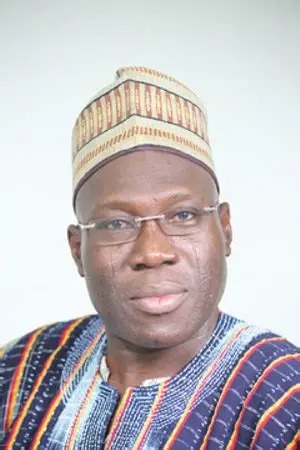
Inusah Fuseini Defends OSP's Independence, Welcomes Supreme Court Ruling on Inclusive Political Party Primaries
Takoradi, Ghana – Former Member of Parliament for Tamale Central and former Deputy Minister for Roads and Highways, Inusah Fuseini, has defended the constitutional role and independence of the Office of the Special Prosecutor (OSP), insisting that the Supreme Court's recent ruling does not diminish the institution's authority to investigate and prosecute corruption-related offences.
Speaking in an interview on Kyzz FM on Thursday, July 30, 2026, Mr. Fuseini said the Supreme Court's decision was not unexpected, noting that questions surrounding the constitutionality of certain provisions of the Office of the Special Prosecutor Act had existed since the legislation was enacted.
According to him, the judgment does not strip the Special Prosecutor of its prosecutorial powers but rather clarifies the constitutional relationship between the Office of the Special Prosecutor and the Attorney-General.
OSP Remains a Key Anti-Corruption Institution
Mr. Fuseini explained that the Office of the Special Prosecutor was established by Parliament as a specialised anti-corruption institution operating under the Office of the Attorney-General, with a clear mandate to independently investigate and prosecute corruption and corruption-related offences.
He noted that while the Attorney-General remains the principal legal adviser to the State and retains constitutional oversight of public prosecutions, Parliament intentionally created the OSP to carry out its specialised functions with a significant degree of operational independence to strengthen Ghana's fight against corruption.
"The decision of the Supreme Court does not take away the prosecutorial powers of the Office of the Special Prosecutor," he stressed.
Cautions Against Political Interference
Mr. Fuseini acknowledged that the Attorney-General possesses the constitutional power of nolle prosequi, which allows the Attorney-General to discontinue criminal proceedings or, in certain circumstances, assume control of prosecutions.
However, he warned that exercising that power in cases involving government officials or members of the ruling party could undermine the independence of the Office of the Special Prosecutor and weaken public confidence in the country's anti-corruption efforts.
He therefore argued that the OSP should be allowed to discharge its specialised prosecutorial mandate independently, except where the Constitution or other laws expressly provide otherwise.
Extradition of Ken Ofori-Atta
Commenting on efforts to extradite former Finance Minister Ken Ofori-Atta, Mr. Fuseini clarified that extradition proceedings fall outside the territorial jurisdiction of the Office of the Special Prosecutor.
He explained that while the OSP has the authority to investigate and prosecute corruption-related offences, the extradition of suspects is the constitutional responsibility of the Attorney-General, acting in the capacity of Minister for Justice.
According to him, extradition processes are conducted in collaboration with the Ministry of Foreign Affairs and relevant foreign authorities through established diplomatic and legal channels.
Supreme Court Decision on Party Primaries Praised
Mr. Fuseini also welcomed the Supreme Court's ruling requiring political parties to allow all members in good standing to participate in the election of parliamentary candidates.
He described the decision as a landmark judgment that would strengthen internal democracy across Ghana's political landscape by giving ordinary party members a greater voice in selecting parliamentary candidates.
According to him, expanding participation in internal party elections would significantly reduce the influence of money and vote-buying, which he said have become deeply entrenched under the delegate-based system.
He argued that restricting voting to a relatively small group of delegates often gives wealthy aspirants an unfair advantage while limiting the chances of capable but less affluent party members.
Reducing the Influence of Money in Politics
Mr. Fuseini further contended that the increasing role of money in internal party elections has contributed to what he described as "state capture," where financial influence increasingly outweighs competence in determining political leadership.
He said the high financial cost of delegate-based primaries has also created pressure on some Members of Parliament to recover campaign expenditures after assuming office instead of focusing fully on their legislative responsibilities and public service.
He expressed confidence that the Supreme Court's ruling, which applies to all political parties, would promote transparency, fairness and accountability in parliamentary primaries by ensuring that candidates are chosen through the collective will of party members rather than the influence of money.
Strengthening Democracy and Accountability
Mr. Fuseini concluded that protecting the operational independence of the Office of the Special Prosecutor while broadening participation in internal political party elections would strengthen Ghana's democratic institutions, improve accountability and reinforce public confidence in both the country's justice system and political process.